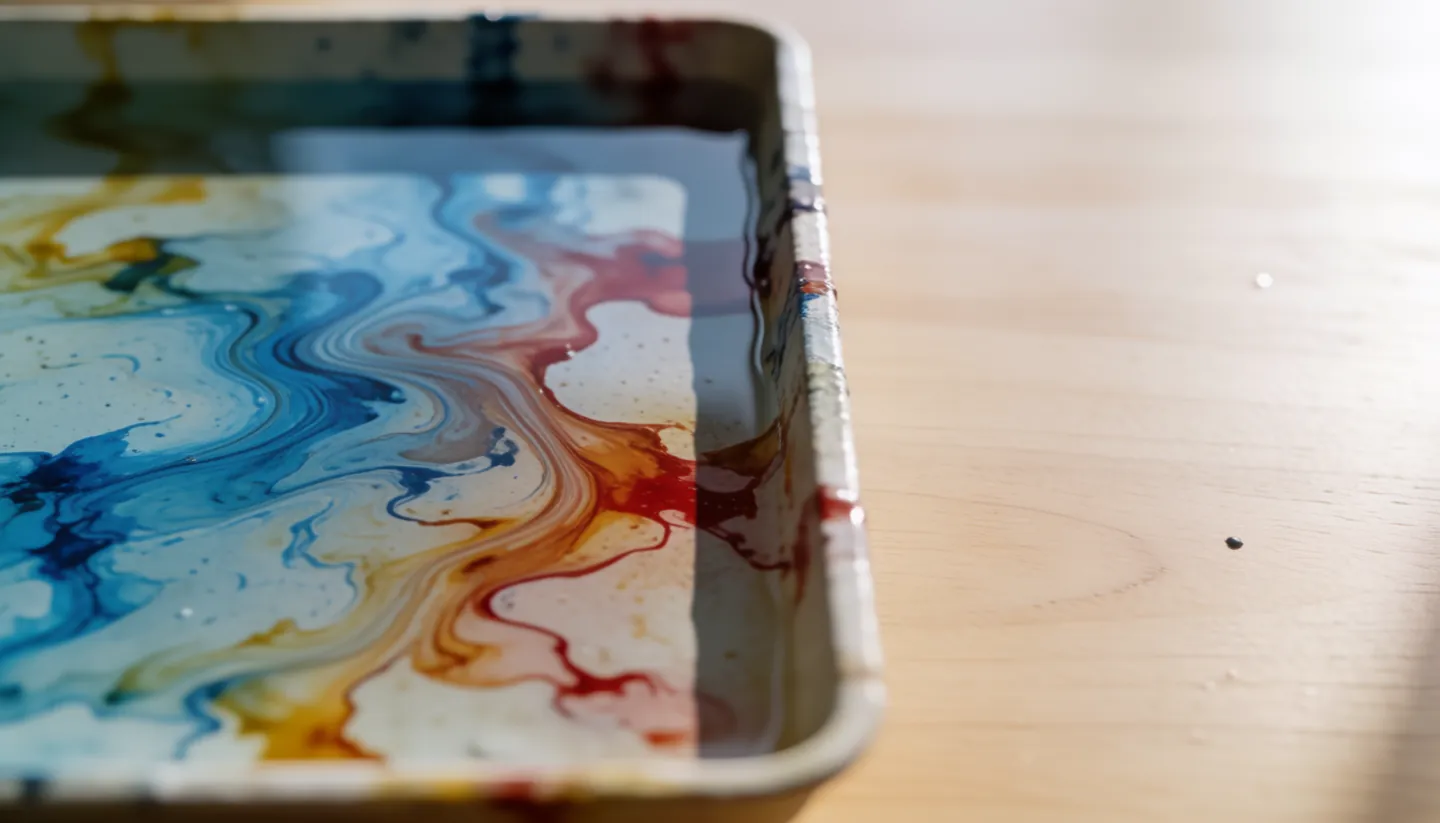
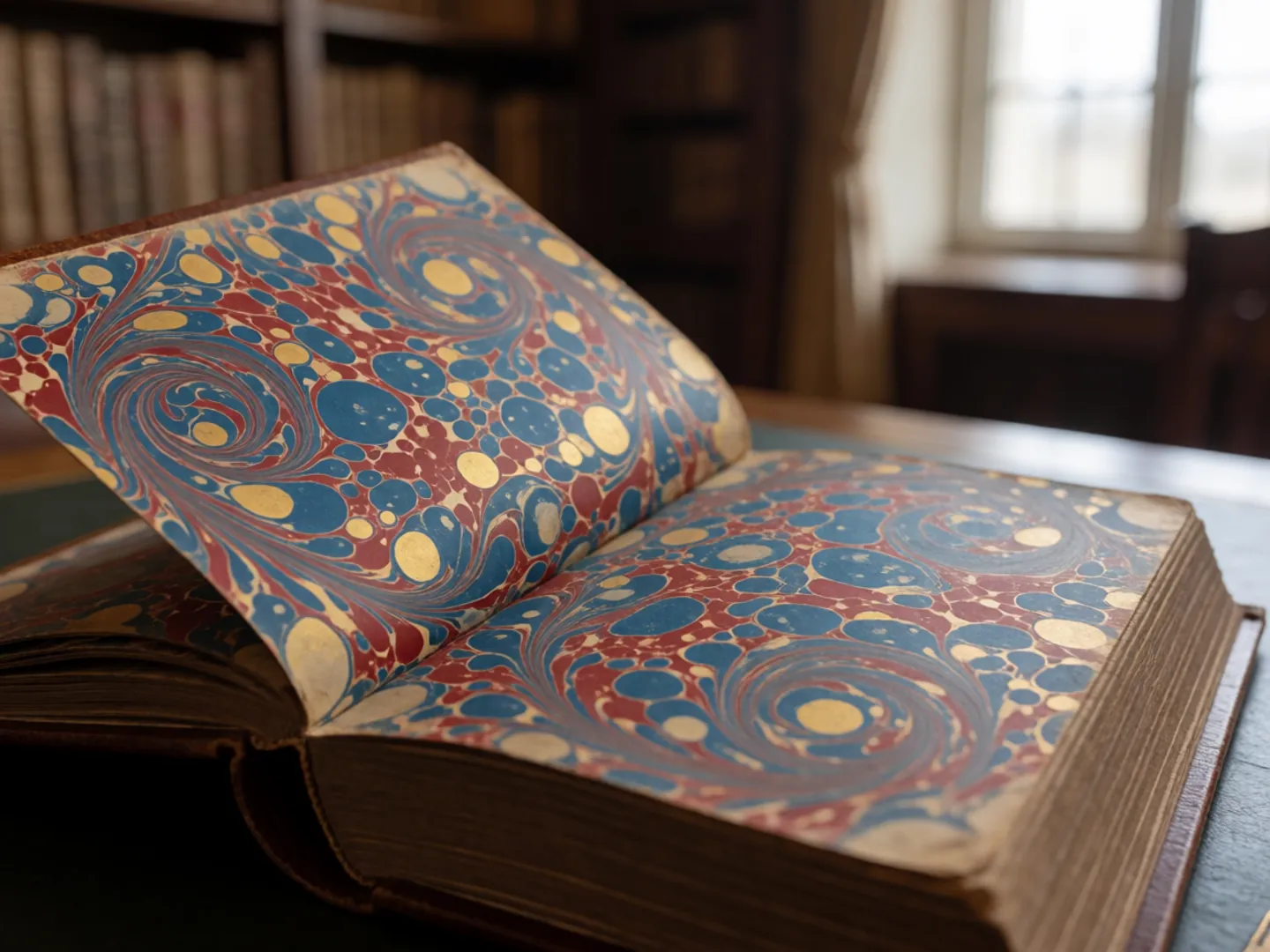
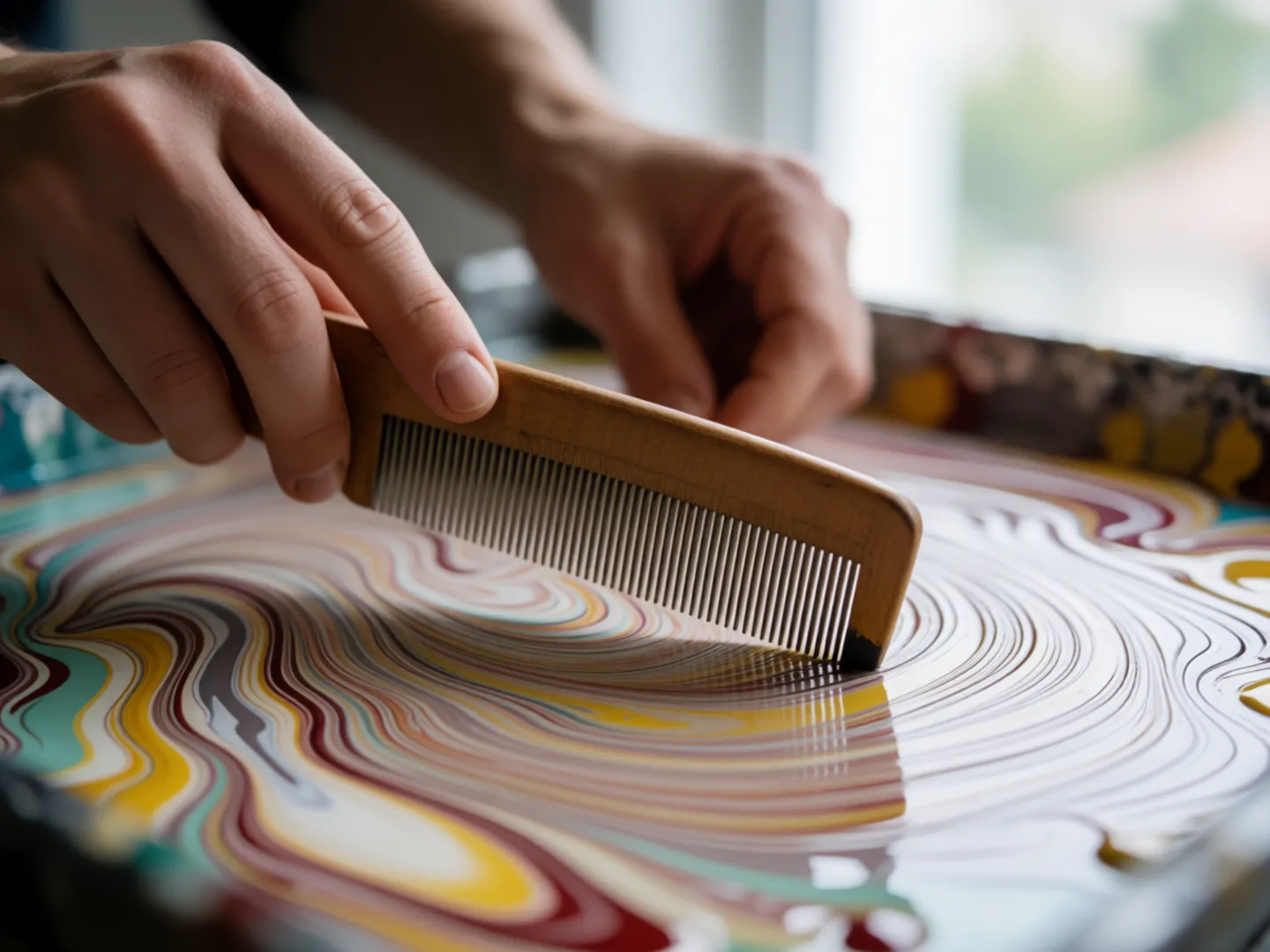
Colour is dropped onto a bath of thickened water, swirled into veins, curls and waves, then lifted off with a sheet of paper. The craft runs from medieval Japan and Ottoman Turkey to the endpapers of European books.
AI-generated image, not a photograph of a real person or place.
Drop the colour
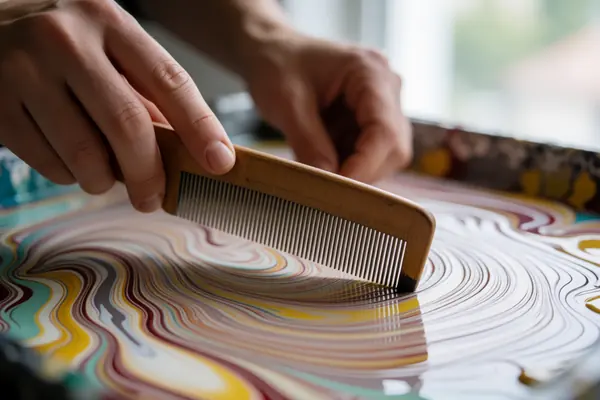
Shape the swirl
Lift the print
An old craft, still practised
THE SHORT ANSWER
Float it, swirl it, print it.
Marbling is surface design on water. The pattern is lifted straight onto paper.
THE BATH
Thickened water
Turkish ebru brought in size, a gum that thickens the water so heavier paints float long enough to be shaped, according to University College Dublin Library.
Pick a stage of traditional marbling to see what happens. The bar shows how far through the process each stage comes.
Based on the AIP Niels Bohr Library's account of Richard Wolfe's description of marbling, and University College Dublin Library's history of marbled papers.
TWO NUMBERS WORTH KNOWING
A slow craft with a long history.
One date for marbling in England, one measure of how long the skill takes.
c. 1655
Earliest English use of marbled paper
Te Papa's research librarian writes that marbled paper was in use in Holland by 1598, in England from about 1655, and in America by 1679.
ENGLAND · TE PAPA LIBRARY
2+ years
To learn the basic skills of ebru
UNESCO says achieving basic skills in ebru takes at least two years, passed on through master and apprentice. It added ebru to its intangible heritage list in 2014.
EBRU · UNESCO
Sources differ on how early marbling began in Japan: Te Papa cites examples from as early as 800 AD, UCD Library around the 10th century, and AIP concrete examples from around the 12th century.
FOUR THINGS TO LOOK FOR
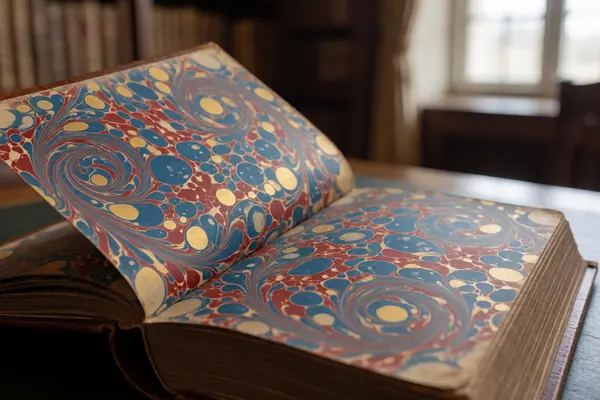
Read a marbled endpaper.
Next time you open an old book in a library or second-hand shop, these are the clues historians and librarians use.
Name the pattern
Marblers gave patterns names such as Turkish stone, tiger, gold vein, French curl and Spanish wave.
Check the page edges
Ledgers often had marbled fore-edges: if a page was torn out, the broken pattern would show it.
Look for a match
Each sheet is unique, but styles repeat enough that patterns can help date a binding.
Find a collection
University and museum libraries, such as UCD and Te Papa, share marbled papers from their rare books online.
AI-generated image, not a photograph of a real person or place.AI-generated image, not a photograph of a real person or place.
SECRETS AND FORGERIES
A guarded trade.
Marblers worked in guilds and kept their methods secret, passed from master to apprentice. In 1853 the English marbler Charles W. Woolnough published The Art of Paper Marbling, revealing many of those secrets, and later replied sharply to critics in his 1881 book.
Because every print is unique, marbling was used against fraud: on ledger edges, on Turkish government documents to show erasures, and briefly by the Bank of England in the late 17th century, until a marbler hired by a counterfeiter copied the paper within weeks.
Questions
Questions people ask
What is paper marbling?
It is a way of decorating paper by floating colours on a liquid surface, arranging them into a pattern, and laying a sheet of paper on top to take the print. Each sheet comes out unique.
What is the difference between suminagashi and ebru?
Suminagashi, Japanese for 'floating ink', floats ink on plain water and is gently blown into smoke-like patterns. Turkish ebru uses paint on water thickened with size, so the colours can be combed into detailed patterns.
Why do old books have marbled endpapers?
Marbling became an important part of European bookbinding from the 16th to 19th centuries, used on covers, endpapers and page edges. Libraries now value these papers as part of a book's history.
What makes the paint float?
Size, a thickener added to the water, lets heavier paints float long enough to shape. Ebru also uses ox-gall in the colours, and an alum mordant helps the pattern stick to the paper.
Is marbling still practised?
Yes, by a small number of professional marblers who also supply conservators. UCD Library notes it has been listed as endangered by the UK's Heritage Crafts Association, and UNESCO recognises ebru.